Guinea Pig vs Rabbit: Which Suits Your Home, Space and Day?
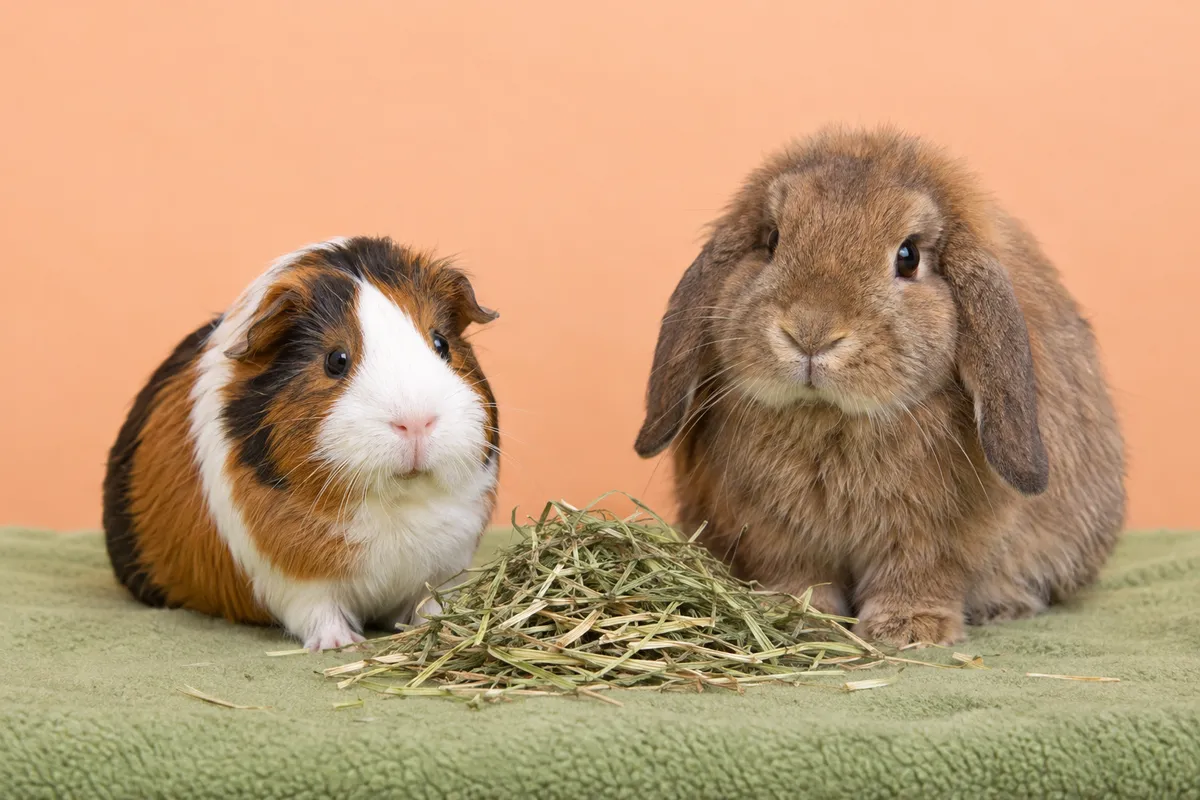
Guinea pigs suit a home with one big, flat enclosure and someone who enjoys chatter; rabbits suit a home that can give a bunny-proofed room and longer free-roam time.
In short
- Guinea pigs usually live happily in one large, flat enclosure, while rabbits need a pen plus daily time in a bunny-proofed room.
- Guinea pigs talk out loud with squeaks and wheeks; rabbits are mostly quiet and show their mood with their body.
- Both are social animals, so plan for a same-species friend and ask your vet or a rescue about bonding.
- Rabbits and guinea pigs are usually kept separately; ask your vet before housing them together.
- Both eat a lot of hay every day, so a good hay feeder and a steady hay supply matter for either one.
Hello, lovely. If you are torn between a guinea pig vs rabbit, the honest answer is that both make wonderful companions, but they fit different homes. Guinea pigs are a great match for a household that can give one roomy, flat enclosure and enjoys a chatty pet. Rabbits are a great match for a household that can give a bunny-proofed room, a little more patience with handling and plenty of floor time. Here is how they compare, one part of daily life at a time.
The quick comparison
Start with the big picture, then read the sections that matter most to your day.
| Guinea pig | Rabbit | |
|---|---|---|
| Typical size | About 1 to 3 pounds | About 3 to 10+ pounds, depending on breed |
| Typical lifespan | About 5 to 7 years | About 8 to 12 years |
| Home base | One large, flat enclosure; they do not jump or climb much | A pen or large enclosure plus a bunny-proofed room |
| Sounds | Squeaks, wheeks, rumbles and purrs | Mostly quiet; the odd thump or soft grunt |
| Handling | Usually calm once settled, held close to the floor | Many prefer to stay on the ground; strong back legs |
| Litter habits | Go where they are, often near the hay | Many learn to use a litter box |
| Chewing | Chews hay and cage toys | Chews everything at bunny height, cables included |
| Company | Social; usually kept in same-species pairs or groups | Social; often kept in a bonded pair |
Space: one big enclosure, or a pen plus a room
Guinea pigs live on one level. They are ground dwellers that do not jump or climb, so floor area matters far more than height. One commonly quoted guide is at least 7.5 to 10.5 square feet for a pair, and bigger is always kinder. A wide, single-level habitat with a washable base, or a modular plastic enclosure you can extend, gives them room to run laps (yes, they do happy little hops called popcorning). Our guinea pig cage setup guide walks through the layout step by step.
Rabbits need room to hop, stretch and stand up tall. Many families give them an exercise pen as a home base and open it into a bunny-proofed room for several hours a day, or let a litter-trained rabbit roam free in one room. A freestanding pen with a walk-through door makes daily care easier on your back. The indoor rabbit setup checklist covers pens, flooring and layouts in detail.
Homes for guinea pigs
Wide and flat beats tall and narrow.


Pens for rabbits
Tall enough to stand up in, wide enough to hop.


Noise and personality: chatter vs quiet thumps
Guinea pigs are the talkers. Expect squeaks, gentle rumbles and a loud, excited wheek when they hear the fridge door or the rustle of a hay bag. Most people find it charming, and it is lovely company in a living room. It may matter if the enclosure sits beside a light sleeper.
Rabbits are quieter. They tell you how they feel with their body: a flop onto one side when relaxed, a joyful leap and twist called a binky, a nose nudge for attention. When startled, a rabbit may thump a back foot on the floor. Rabbits are often most lively around dawn and dusk, so evenings can be their playtime.
Handling and family life
Guinea pigs are often described as easier to hold. Scoop one up with a hand under the chest and the other under the bottom, then sit down and keep them low on your lap. Rabbits are larger and many would rather stay on the ground; their back legs are strong, so a rabbit that kicks to get down can scratch you or hurt itself. With rabbits, sitting on the floor and letting them come to you usually works best.
With children, stay close during every cuddle, keep all holding seated and on the floor, and let the pet set the pace. A tunnel or hideout nearby gives them a calm place to retreat.
Company: both like a friend of their own kind
Both guinea pigs and rabbits are social. Guinea pigs are usually kept in same-species pairs or small groups, and rabbits are often kept as a bonded pair. Introductions can take time, especially for rabbits, so ask your vet or a local rescue about bonding and which pairings suit your animals.
What about a guinea pig and a rabbit together? They are usually kept separately, since they are different sizes and speak different body languages. If you are thinking about it, ask your vet first.
Daily care and hay
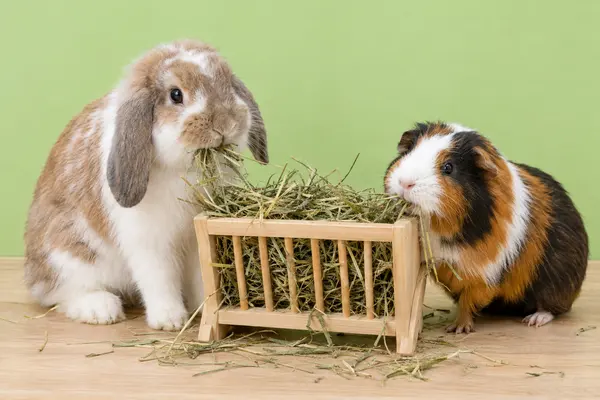
The daily rhythm is similar: fresh water, a fresh pile of hay, a quick spot clean and some time together. Hay is the big daily item for both, so plan where it lives and how it is served. A hanging hay bag or a sturdy metal rack keeps it off the floor, clean and easy to pull from. Timothy hay comes in different cuttings with different textures, from soft and leafy to long and stemmy; for anything about diet, ask your vet.
Hay and hay feeders
Choose a bag size that suits your storage space.


Add a leak-resistant water bottle or a heavy bowl, and you have the daily basics for either pet. You can browse more in our small pet shop and bowls and feeders.
Chewing and bunny-proofing
Rabbits are the bigger chewing project. Anything at bunny height is fair game: charging cables, baseboards, chair legs, the corner of the sofa. Before free-roam time, lift or cover cords, block gaps behind furniture and give plenty of safe chew options so the furniture is less tempting. Guinea pigs mostly chew what is in their enclosure, so their floor time is easier to supervise in a small playpen.
Chews, mats and tunnels
Rotate a few so there is always something new to nibble or explore.


Litter habits and bedding
Many rabbits learn to use a litter box, especially once they have a corner they like. A large corner pan with a grate and pull-out drawer, with hay placed at one end, is a classic setup. Guinea pigs tend to go wherever they happen to be, often near their hay, so their care leans on absorbent bedding or washable fleece liners that you swap and wash.
Litter pans and liners
Pans for rabbits, washable liners that suit guinea pig floors.


Starter kit differences
Both pets share a core kit: hay, a hay feeder, water, hideouts and chews. The differences come down to the home base and housekeeping.
- Guinea pig: a wide single-level enclosure, fleece liners or bedding, at least one hideout per guinea pig, a hay feeder and a carrier for trips to the vet.
- Rabbit: a tall pen or large enclosure, a litter box and litter, a wooden hideout they can sit on top of, plenty of chews, cord covers for free-roam time and a carrier.
Hideouts and carriers
Somewhere to hide at home, and a snug ride for visits.


A roomy start for guinea pigs
This wire habitat measures 47 by 24 inches with a 14-inch-tall frame, so the space goes into floor area rather than height. The canvas base is hand washable and the top folds open for easy cleaning.
- Single level, which suits guinea pigs
- Fold-open top for daily spot cleaning

A litter box made for rabbits
A tall-backed corner pan with a grate on top and a pull-out drawer underneath, so emptying it is quick and the floor stays tidy.
- Corner shape fits a pen
- Drawer slides out for cleaning
You might prefer a guinea pig if
- You have space for one large, flat enclosure but not a whole bunny-proofed room.
- You enjoy a pet that greets you with squeaks and wheeks.
- You want a smaller pet that is usually comfortable being held on a lap.
- You can commit to around 5 to 7 years of care.
You might prefer a rabbit if
- You can give daily free-roam time in a room you are happy to bunny-proof.
- You like a quieter pet with expressive body language.
- You are happy with a pet that may prefer floor cuddles to being picked up.
- You can plan for around 8 to 12 years together, and are keen on litter training.
Whichever one wins your heart, start with a generous home base, a steady supply of hay and a friend of their own kind, and ask your vet about everything health related. You can also search all small pet supplies to compare more options.
Questions people ask
Is it better to have a guinea pig or a bunny?
Neither is better; they suit different homes. Guinea pigs fit a home with room for one wide enclosure and people who enjoy a talkative pet. Rabbits fit a home that can give a bunny-proofed room and daily free-roam time.
Are guinea pigs easier than rabbits?
Many people find guinea pigs easier day to day because they live in one enclosure, are smaller and are often calmer to hold. Rabbits need more space, bunny-proofing and patience with handling, though many learn to use a litter box. Both need daily care, hay and company.
Can rabbits and guinea pigs live together?
They are usually kept separately, each with a friend of its own kind. They differ in size and body language. If you are considering it, ask your vet first.
Can I leave a rabbit or guinea pig alone for 2 days?
It is best to arrange for someone to check on them every day, refill hay and water and make sure they are eating. Small pets can need help quickly if something changes, so ask your vet what is safe for your pets.
Which is quieter, a guinea pig or a rabbit?
Rabbits are usually quieter. Guinea pigs squeak and wheek, especially when they hear food coming, while rabbits mostly communicate with body language and the occasional thump.
About the numbers
- Google search summary for "guinea pig vs rabbit as a pet", United States, read 2026-10-08: guinea pigs live 5 to 7 years and weigh 1 to 3 pounds; rabbits live 8 to 12 years and weigh 3 to 10+ pounds; at least 7.5 to 10.5 square feet for a pair of guinea pigs; guinea pigs do not jump or climb
- Google search summary for "are guinea pigs easier than rabbits", United States, read 2026-10-08: guinea pigs typically calmer to handle; rabbits have strong back legs and may kick when lifted
- Google People also ask, United States, read 2026-10-08: questions shoppers ask: guinea pig or bunny, which is easier, leaving a rabbit alone for 2 days