Best Toys for Rabbits: Chew, Toss, Dig, Hide and Forage
The best toys for rabbits match how bunnies play: something safe to chew, something to toss, a place to dig, a tunnel to hide in and a puzzle to forage from. Rotate them weekly.
In short
- The best toys for rabbits cover five kinds of play: chewing, tossing, digging, hiding and foraging.
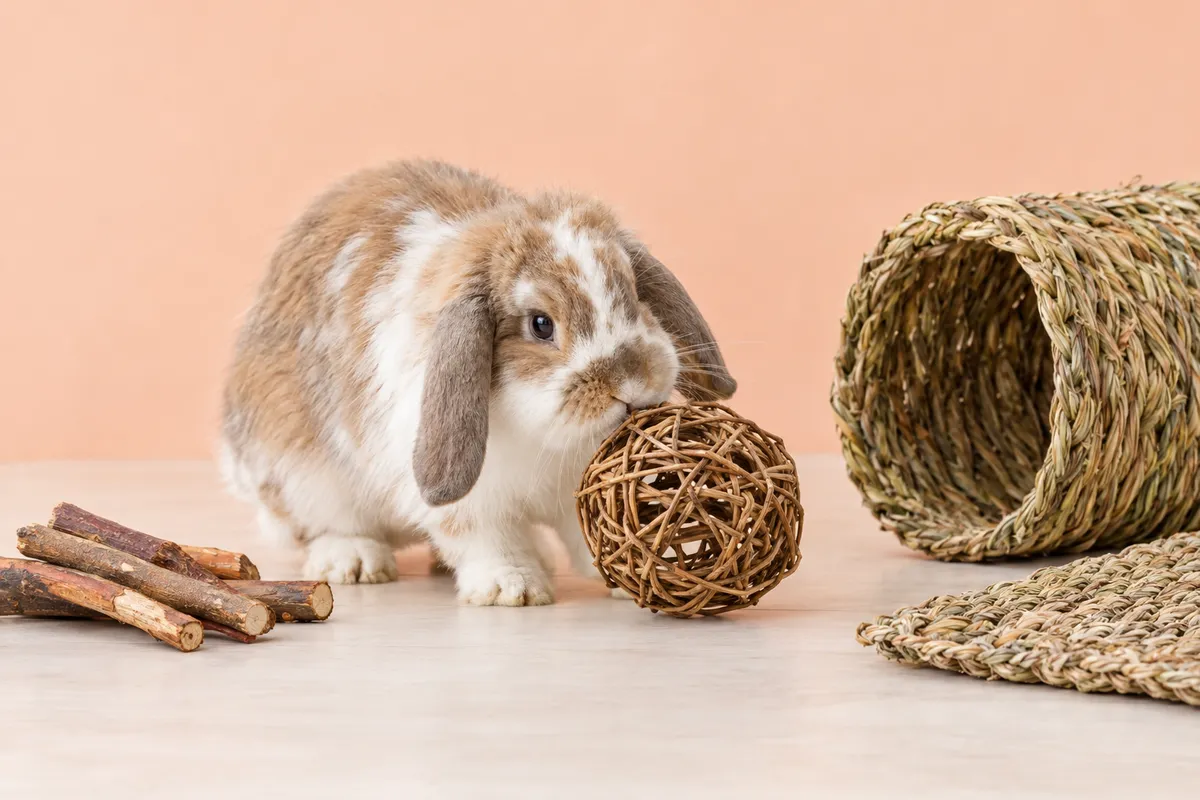
- Good chew toys are made of untreated wood, apple sticks, willow, seagrass or woven hay, with no glue, paint or varnish.
- Tunnels and hideouts give a bunny somewhere to dash through and somewhere to feel safe, and many rabbits love both.
- Rotating three or four toys every week keeps them feeling new without filling the pen.
- Skip soft plastic, rubber, foam and anything with small parts that could come loose, and ask your vet about teeth or diet.
Hello, lovely bunny parent. The best toys for rabbits are the ones that let a bunny do what bunnies were built to do: chew, toss things around, dig, dash into a hiding spot and nose about for a snack. A good toy box has at least one toy for each of those, made from natural materials, swapped around often so nothing gets boring.
Rabbits are clever, curious and quick to tell you when they are bored (a toppled bowl or a nibbled baseboard is a clue). Below, we sort toys by the way bunnies actually play, explain what each material is good for, and share a simple rotation so your rabbit has something new to investigate every week. If you are still setting up the space, start with our indoor rabbit setup checklist.
Chew toys: untreated wood, apple sticks, willow and hay
Every rabbit needs chew toys, so this is the first box to fill. Rabbits chew all day, and giving them safe things to gnaw keeps their attention on the toys rather than on your chair legs or cables. The material matters more than the shape.
- Apple sticks are small fruitwood branches. They are light, easy to hold in the paws and a favourite starting point.
- Untreated wood blocks, rings and ladders (pine, apple, birch) give a firmer chew. Look for plain, unvarnished wood with no paint.
- Willow is soft and bendy, woven into balls, rings and tunnels that bunnies can both chew and fling.
- Seagrass and water hyacinth are woven into mats, baskets and houses. They are softer to nibble and great for shredding.
- Woven timothy hay shapes (sticks, rings, cakes and popsicles) mix chewing with a taste of something bunnies already know.
Natural chews to start with
Apple sticks, bamboo and woven hay in sizes a bunny can carry.


Toss and flip toys for playful bunnies
Many rabbits love to pick something up in their teeth and fling it across the room. Light, rolling toys are perfect for this: a willow ball, a woven grass ball, a set of stacking cups or a hard wooden ring. Watching a bunny nose a ball along the floor, then toss it with a flick of the head, is one of the sweetest parts of the day.
Pick balls that are big enough to grip and light enough to throw. Willow and grass balls are hollow, so you can tuck a little hay inside to make them more interesting. Stacking cups are a classic: build a little tower and let your rabbit knock it down, then nudge the cups around.
Balls and cups to nudge and toss
Light enough to flick, sturdy enough to chew.


Stacking cups for tower toppling
A set of nesting cups in soft colours. Stack them, hide a bit of hay under one, and let your bunny knock the tower over.
- Eight sizes nest together for tidy storage
- Easy to wash between play sessions
- Best for play time with you nearby, not as a chew
Dig boxes: let them burrow somewhere you choose
Digging is pure rabbit, and a dig box gives that instinct a happy home so the rug does not have to. A dig box is simply a sturdy container your rabbit can climb into and scratch around in.
- Take a large cardboard box or a shallow storage tub with a low entry side.
- Fill it with crumpled plain paper, shredded cardboard or a thick layer of hay.
- Scatter a few favourite bits of hay or a familiar chew deep inside so digging has a reward.
- Refresh the filling when it gets flat or messy, and remove any tape or printed glossy paper.
Woven grass mats make a good base layer: bunnies scratch and pull at them, and they can be replaced when worn. A wooden scratch board is another way to give paws something to work on.
Mats and boards for scratching and digging
Natural woven grass and wood that can be pulled and nibbled.


Tunnels and hideouts: somewhere to dash and somewhere to rest
Rabbits feel safest when they have somewhere to duck into, and many love a tunnel to zoom through. A good setup has both: a tunnel for play and a hideout for quiet time. Look for openings wide enough that your rabbit can turn around without squeezing.
| Type | Good for | Keep in mind |
|---|---|---|
| Fabric crinkle tunnel | Zooming, flopping inside, multi-way play | Fold away for storage; check seams for loose threads |
| Woven hay or willow tunnel | Hiding and chewing at the same time | It will be eaten over time, so plan to replace it |
| Wooden hideout or castle | A sturdy, quiet place to rest | Choose untreated wood and a doorway your bunny fits through easily |
| Seagrass house | A cosy, chewable nest | Softer than wood, so it wears faster |
Tunnels and hideouts
From collapsible crinkle tunnels to wooden castles.


Comparing rabbits with other small pets? Our guinea pig vs rabbit guide looks at space, routines and play side by side.
Foraging and treat toys for clever bunnies
Foraging toys turn snack time into a game. Your rabbit has to sniff, nudge, lift or slide something to find what is hidden, which is a lovely way to keep a busy mind entertained. These are among the best interactive toys for rabbits.
- Treat balls roll and drop small pieces as your rabbit pushes them along.
- Puzzle boards have sliders, lids and cups to lift. Start with the easiest compartments open so your bunny gets the idea.
- Hanging chews and play tables let you clip hay and chews up high, so your rabbit stretches and pulls for them.
- Snuffle-style toys hide bits of hay in folds or holes for sniffing out.
Foraging toys and puzzles
Hide a little hay or a familiar chew and let them work it out.


Rotate toys to beat boredom
You do not need a mountain of toys. Rabbits notice what is new, so a small set that changes often feels more exciting than a crowded pen. Here is a simple weekly rotation:
- Keep three or four toys out at once: one chew, one toss toy, one hiding place and one foraging toy.
- Each week, swap the chew and the toss toy for different ones from the cupboard.
- Move the tunnel to a new spot or change its shape.
- Leave the favourite hideout where it is, so your rabbit always has a familiar safe place.
Play together, too. Sitting on the floor while your bunny explores a new toy is a gentle way to build trust. Browse more ideas in our rabbit toys and small pet chews collections, or search for bunny toys.
What to avoid when choosing rabbit toys
The safest rabbit toys are simple. Before you add anything new, check the materials and give it a gentle tug.
- Soft plastic, rubber and foam: they can be bitten into pieces. Hard plastic cups and puzzles are for supervised play, not chewing.
- Glue, paint, varnish and dyes: choose plain natural materials.
- Small bits: bells, beads, strings and plastic eyes that could come loose.
- Toys for other animals: cat toys with catnip, feathers or fur and dog chews are made for different mouths.
- Worn toys: replace chews that have splintered or tunnels with holes or loose threads.
Introduce one new toy at a time and stay close the first few times. If your rabbit is not interested, try again another day in a different spot. If you notice changes in eating, chewing or energy, ask your vet.
Questions people ask
What are some good toys for rabbits?
Good rabbit toys include apple sticks and untreated wood chews, willow and woven grass balls, stacking cups, a dig box, a tunnel, a hideout and a foraging toy. Choose natural materials with no glue or paint, and offer at least one toy for chewing, tossing, digging, hiding and foraging.
What toys keep bunnies entertained?
Foraging toys and tunnels tend to hold attention longest because they give a bunny something to work out or explore. Treat balls, puzzle boards, hay-stuffed willow balls and multi-way tunnels all work well. Rotating them weekly keeps them feeling new.
Can I make homemade chew toys for rabbits?
Yes. A plain cardboard box with a doorway cut in it, a toilet paper tube stuffed with hay, or a box of crumpled plain paper all make simple homemade toys. Remove tape, staples and glossy printed paper first, and offer them while you can keep an eye on play.
How many toys does a rabbit need?
Three or four out at a time is plenty: one to chew, one to toss, one to hide in and one to forage from. Keep a few more in a cupboard and swap them each week so there is always something new to explore.
Are plastic toys safe for rabbits?
Soft plastic and rubber can be chewed into pieces, so it is best to avoid them. Hard plastic stacking cups and puzzle toys are fine for supervised play, but put them away when play is over and offer natural chews instead.
About the numbers
- Google search, United States, read 2026-10-28: People also ask: What are some good toys for rabbits?, What toys keep bunnies entertained?; related searches include rabbit toys for boredom, homemade chew toys for rabbits and interactive toys for rabbits.