The Chuckit! Story: Chester, a Ball Claw and a Longer Fetch
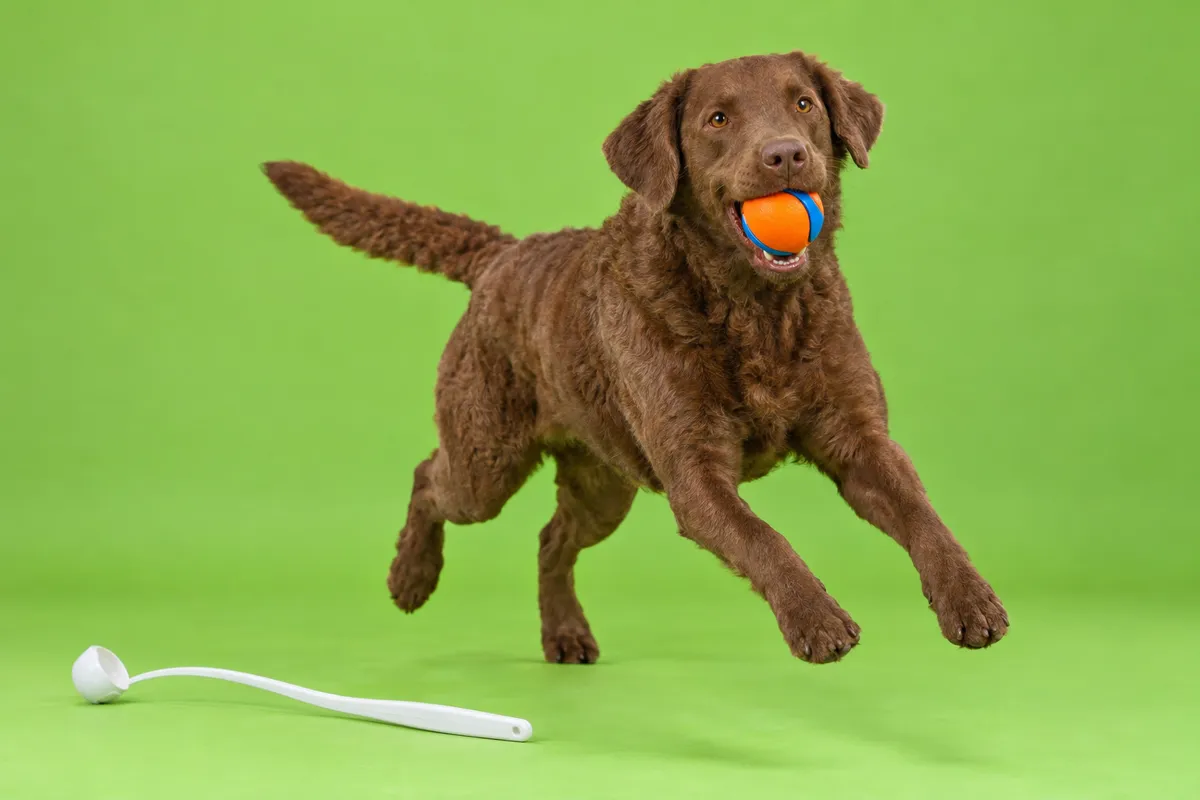
Chuckit! began at Canine Hardware in Washington State, where a Chesapeake Bay Retriever named Chester tested every product and a plastic launcher let people throw a tennis ball far without bending down.
In short
- Chuckit! started as a product of Canine Hardware, Inc., a small Washington State company whose early web pages listed Issaquah and later Kent as home.
- The company named a Chesapeake Bay Retriever called Chester its Chairman of the Board and said nothing left the door without his approval.
- The first Chuckit! was a 26-inch plastic launcher with a ball claw, so owners could scoop up a tennis ball and throw it without touching it.
- Today Chuckit! is part of Petmate, which calls itself the official home of the brand and makes balls, launchers, flyers, tug toys and indoor fetch toys.
- Match a Chuckit! ball to the weight range on its label and to your launcher's size, and stay close during play.
Hello, lovely. If you have ever watched a dog quiver with joy as you lean back to throw, you already know the heart of this story. Chuckit! history begins with a small company, a curly brown retriever and one very practical idea: throw the ball farther, and never pick up a slimy one again.
Where Chuckit! began: Canine Hardware in Washington State
Chuckit! started life as a product of Canine Hardware, Inc., a dog gear company in Washington State. Its own web pages from around the turn of the millennium carried the line "Sporting Gear for dogs and other useful stuff" and gave the headquarters as Issaquah, Washington. By the mid-2000s the same pages named Kent, Washington as home, with a Seattle address in the footer.
The company described its work in a way that still sounds friendly today. It said making top quality, fun dog products was more than a job, it was a calling, and that it took having fun very seriously. Its welcome line was simple: people friendly products that dogs love.
Chester, the Chairman of the Board
Every good brand story needs a hero, and this one has a Chesapeake Bay Retriever named Chester. Canine Hardware gave him the title Chairman of the Board and said he personally tested and approved every product. The company wrote that Chester had played with, eaten from or tugged on everything it made, and that nothing went out the door until it earned his Official Paw of Approval.
Chesapeake Bay Retrievers are water-loving retrieving dogs, so it is easy to picture why a fetch tool mattered so much in that office. A dog who wants the ball again, and again, and again, is the perfect product tester for a launcher.
Before the launcher: treat totes, grub tubs and travel bowls
The launcher was not the only thing on Canine Hardware's shelf. Its early pages showed a family of carry gear for days out with a dog:
- Treat Totes, pouches for training treats with hands-free convenience.
- Grub Tubs, drawstring travel bowls that held a supply of dog food and folded into a compact triangle.
- The Hydro Bowl, a travel water bowl in durable plastic fabric that snapped around a leash, bicycle or backpack strap.
- The Fetch Tote, a nylon carrier for a dog's favorite tennis ball.
You can see the thread: practical gear for people who take their dogs everywhere. The launcher took that idea and aimed it at the most loved game of all.
How the first Chuckit! launcher worked
The original Chuckit! was a 26-inch plastic ball launcher built around a standard tennis ball. The company called it a way to exercise your dog without wearing out your arm. At the end sat a ball claw: press it down over a ball and it snapped around it and held on, so you never had to bend down to pick up a slimy ball.
The early instructions were charming and very clear. Grip the handle, reach back over your shoulder until the ball is behind you, then swing forward in a smooth arc and follow through. The launcher releases the ball when you swing fast enough. The company said there was a learning curve of 10 to 20 throws and that, with a little practice, people could throw 100 to 140 feet. It also asked owners to use the launcher in open space, away from people, animals and buildings, and never to aim it at anyone.
The first colors read like a box of crayons: green, purple, royal blue, black, red and day-glo orange. A smaller Chuckit! Jr. followed at 18 inches long, sized for backyards and short enough to slip into a backpack for a trip to the park.
Launchers, from pocket size to full reach
The long Pro launchers throw farthest; the short ones suit small yards and smaller dogs.


From one launcher to a whole fetch family
The next big idea arrived in 2002: the Flying Squirrel, a fabric flyer you throw by a paw like a flying disc. Canine Hardware said its spinning feet made it exciting to watch, its raised sides made it easy to pick up, its rubber feet were durable and it floated in water. It came in small, medium and large, and a large version is still in the range today.
Over the years the brand grew into balls, flyers, tug toys and toys for water and indoor play. Today Chuckit! is part of Petmate, which describes itself as the official home of Chuckit! and the brand as the go-to name for active dogs and the people who love to play with them. Petmate says the toys come in sizes for small, medium and large breeds and are made for land, water or indoor use.
Fetch balls in every size
Rubber, glow, squeaker and scented options; check each label's weight range.


Which Chuckit! ball size fits your dog
Chuckit! balls are labelled by diameter and by dog weight, and most are made to fit the matching launcher. Here is how the sizes on our fetch balls line up, using the weight ranges printed in their own titles.
| Ball size | Diameter | Weight range on the label |
|---|---|---|
| Small | 2 inches | Dogs up to 20 lbs |
| Medium | 2.5 inches | Dogs 20 to 60 lbs |
| Large | 3 inches | Dogs 60 to 100 lbs |
| XL | 3.5 inches | Dogs over 100 lbs |
| XXL | 4 inches | Dogs over 100 lbs |
Flyers, tug toys and indoor fetch
Not every dog is a ball dog. The flyers float, so they suit beach and pool days, and their soft edges are made for catching. The tug toys put an Ultra-style ball on a nylon cord handle, so you get fetch and a gentle game of tug in one. For rainy days, the indoor range wraps a soft core in chenille fabric for slower, gentler fetch on hardwood floors.
Flyers for water and open fields
Light, floating and easy to spot.


Tug and fetch in one toy
A rubber ball on a nylon cord handle.


Fetch for indoors and kick games
Soft indoor toys, plus balls you kick instead of throw.


The everyday classic
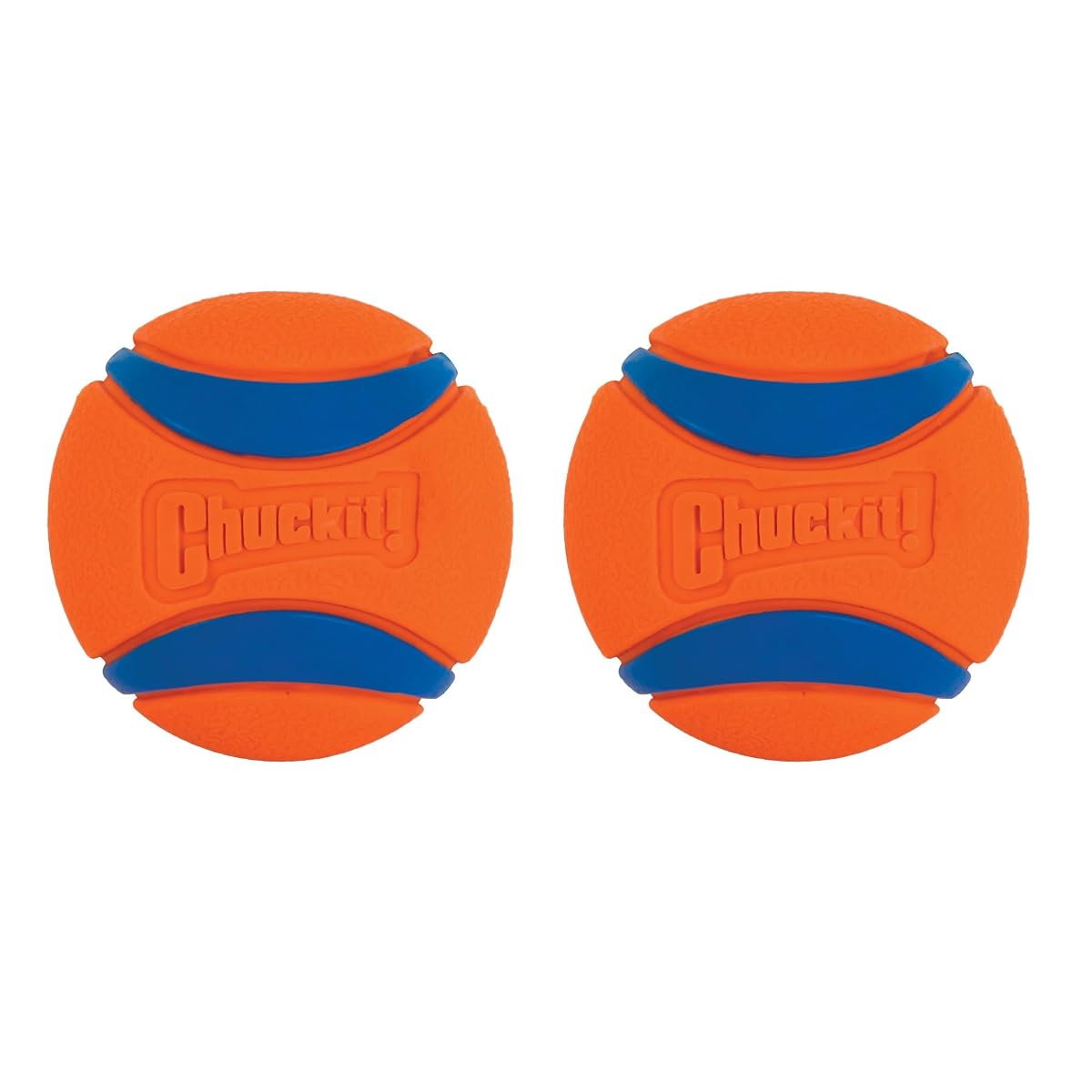
The medium Ultra Ball is the brand's bright orange and blue rubber ball, made to bounce high and float. It fits medium launchers and is easy to spot in grass.
- 2.5-inch diameter for dogs 20 to 60 lbs
- Rubber that bounces and floats
- Pairs with a medium launcher
For rainy afternoons
The Indoor Ball is a fluffy chenille ball around a soft core, sized at 4.75 inches, for calmer fetch down a hallway.
- Soft fabric outer
- Gentler on floors and furniture
- Bright colors for easy finding
Playing fetch the Chester way
Chester's spirit is simple: test it together and have fun. A few gentle habits help every game.
- Start short. Practice your launcher swing with gentle tosses before going for distance.
- Pick open ground, away from roads, people and other dogs, just as the first instructions asked.
- Bring water and take breaks, and ask your vet how much running suits your dog's age and build.
- Swap worn or split balls for fresh ones, and put toys away when play is over.
- Stay close and keep fetch a shared game, not a solo one.
Heading out for a longer day? Our guide to types of dog leashes helps you pick the right lead for the park, and dog car seats compared covers the ride there. You can also browse every fetch toy we carry.
Questions people ask
Who invented the Chuckit! ball launcher?
Chuckit! came from Canine Hardware, Inc., a dog gear company in Washington State. Its early pages introduced the launcher as a new throwing tool with a ball claw for hands-free pickup, tested by the company's Chesapeake Bay Retriever, Chester.
Who owns Chuckit! now?
Chuckit! is part of Petmate today. Petmate calls itself the official home of Chuckit! and lists it among its brands.
Where did Chuckit! start?
In Washington State. Canine Hardware's early pages gave Issaquah as its headquarters, and later pages named Kent, with a Seattle address in the footer.
Why do dogs love Chuckit! balls?
Every dog is different, but the balls are made to bounce high, many float, and the bright orange and blue is easy to spot. A launcher also lets you throw farther, so the chase lasts longer.
Are Chuckit! balls safer than tennis balls?
We cannot make safety or health claims for any toy. Choose the size printed for your dog's weight, check toys often for wear, supervise play and ask your vet if you have questions about your dog.
About the numbers
- Canine Hardware, Inc. (the original Chuckit! maker), its own company and product pages, 1999 to 2006: Issaquah and later Kent, Washington; Chester the Chesapeake Bay Retriever as Chairman of the Board; the 26-inch launcher, ball claw, 10 to 20 throw learning curve and 100 to 140 foot throws; Chuckit! Jr. at 18 inches; Flying Squirrel, Treat Totes, Grub Tubs, Hydro Bowl and Fetch Tote
- Petmate, its Chuckit! brand page and company story: Chuckit! is part of Petmate, which calls itself the official home of the brand; toys for small, medium and large breeds and for land, water and indoor use
- Hey Lovi product listings: ball diameters and dog weight ranges in the size table